

18 Sept 2026 · 6 min read · Amello
How to Get More Repeat Customers for Your Restaurant
Getting someone to visit your restaurant once is only the beginning.
The real opportunity starts when they decide to come back.
A restaurant that constantly depends on new customers has to keep spending money and effort to replace the people who never return. A restaurant with a strong base of repeat customers has something much more valuable: customers who already know the food, trust the experience, and have fewer reasons to choose a competitor.
But repeat business doesn't happen simply because the food was good.
Customers have dozens of options, and even a satisfied guest can forget about your restaurant after a few weeks.
The goal is to stay relevant without becoming annoying.
Here are practical ways to turn more first-time diners into regular customers.
1. Start by Measuring How Many Customers Actually Return
Before trying to improve retention, understand what your repeat customer behavior currently looks like.
A restaurant may have strong sales while still having weak customer retention.
For example, imagine your monthly sales are growing because you're acquiring many new customers through advertisements. That sounds positive.
But if very few of those customers ever return, you're effectively rebuilding your customer base every month.
Start tracking:
First-time customers
Repeat customers
Number of visits per customer
Time between visits
Average spend of repeat customers
Customers who used to visit frequently but have stopped
Repeat behavior by location or ordering channel
The important question isn't only:
“How many customers do we have?”
It is: “How many customers are choosing us again?”
2. Give Customers a Reason to Remember You
Good food matters, but customers rarely remember a restaurant only because the food was “good.” They remember specific experiences. It might be:
A signature dish
Exceptional service
A unique ambience
A personal interaction with staff
A memorable dessert
A thoughtful surprise
A particular occasion celebrated at the restaurant
Your restaurant needs something customers can easily associate with you.
Think about the restaurants you personally return to.
You probably don't think:
“That restaurant delivered an acceptable experience.”
You think:
“That's the place with the incredible kebabs.”
or: “That's where we always go for family dinners.”
Strong repeat behavior often begins with a clear memory.
Ask yourself: What do we want customers to remember about us after they leave?
3. Make the Second Visit Easier Than the First
The first visit usually requires the most effort from the customer.
They have to discover you, evaluate your ratings, understand the menu, choose what to order and decide whether you're worth trying.
After that first successful experience, you already have an advantage.
Don't make them start from zero again.
Make it easy for customers to:
Find your restaurant again
Reorder favourite dishes
Make another reservation
Find your menu
Contact you
Receive relevant updates
Discover something new worth returning for
For delivery customers, a simple reorder experience can be extremely valuable.
For dine-in customers, easy reservations and updated Google information remove unnecessary friction.
Retention isn't only about marketing.
Sometimes it is simply about making the next visit easier.
4. Stop Treating Every Customer the Same
One of the biggest mistakes in restaurant CRM is sending the same message to everyone.
Consider these customers:
Customer A: Visited yesterday for the first time.
Customer B: Has ordered eight times but hasn't returned in 45 days.
Customer C: Visits almost every weekend.
Customer D: Ordered once six months ago.
These people should not receive the same communication.
Create meaningful customer groups such as:
First-time customers
Frequent customers
High-value customers
Recently inactive customers
Long-inactive customers
Dine-in regulars
Delivery regulars
Customers who repeatedly order particular dishes
The point isn't to create dozens of complicated segments.
The point is to stop behaving as though every customer has the same relationship with your restaurant.

5. Follow Up at the Right Moment
Timing matters.
Sending a customer another offer two hours after they leave can feel unnecessary.
Waiting six months may mean they've already forgotten about you.
Think about the natural repeat cycle for your restaurant.
A coffee shop might reasonably see the same customer several times per week.
A premium fine-dining restaurant may have a much longer repeat cycle.
A family restaurant might see regular customers every few weeks.
Your follow-up strategy should reflect that behavior.
Useful moments might include:
A few days after a first visit
Around the customer's usual reorder window
When a frequent customer becomes inactive
During birthdays or anniversaries
When you launch a relevant new menu item
Before a recurring weekend occasion
The best message arrives when the customer already has a reason to consider returning.
6. Give Customers Relevant Reasons to Come Back
Repeat business doesn't always require a discount.
Customers return because something feels worth returning for.
That could be:
A new menu launch
Seasonal dishes
Weekend specials
Chef recommendations
Live events
Limited-time desserts
New brunch menus
Festival menus
Experiences designed for families or groups
The difference is important.
“Come back because we're offering 20% off.”
is very different from:
“Your favorite mango dessert is back for the summer.”
The second gives the customer a reason connected to the restaurant experience rather than price alone.
7. Use Loyalty Rewards Carefully
Loyalty programs can encourage repeat behavior, but only when they are simple enough for customers to understand.
If customers need to calculate complicated points, tiers and expiry conditions, the program may create more friction than loyalty.
A useful loyalty system should answer one question clearly:
“What do I get for coming back?”
Possible approaches include:
Visit-based rewards
Spend-based rewards
Complimentary items after a certain number of visits
Member-only dishes or experiences
Early access to events
Special treatment for high-value regulars
But don't confuse rewards with loyalty.
A customer who returns only because of a ₹100 coupon may disappear as soon as someone else offers ₹150.
True loyalty comes from combining a good restaurant experience with recognition and convenience.
8. Recognise Your Best Customers
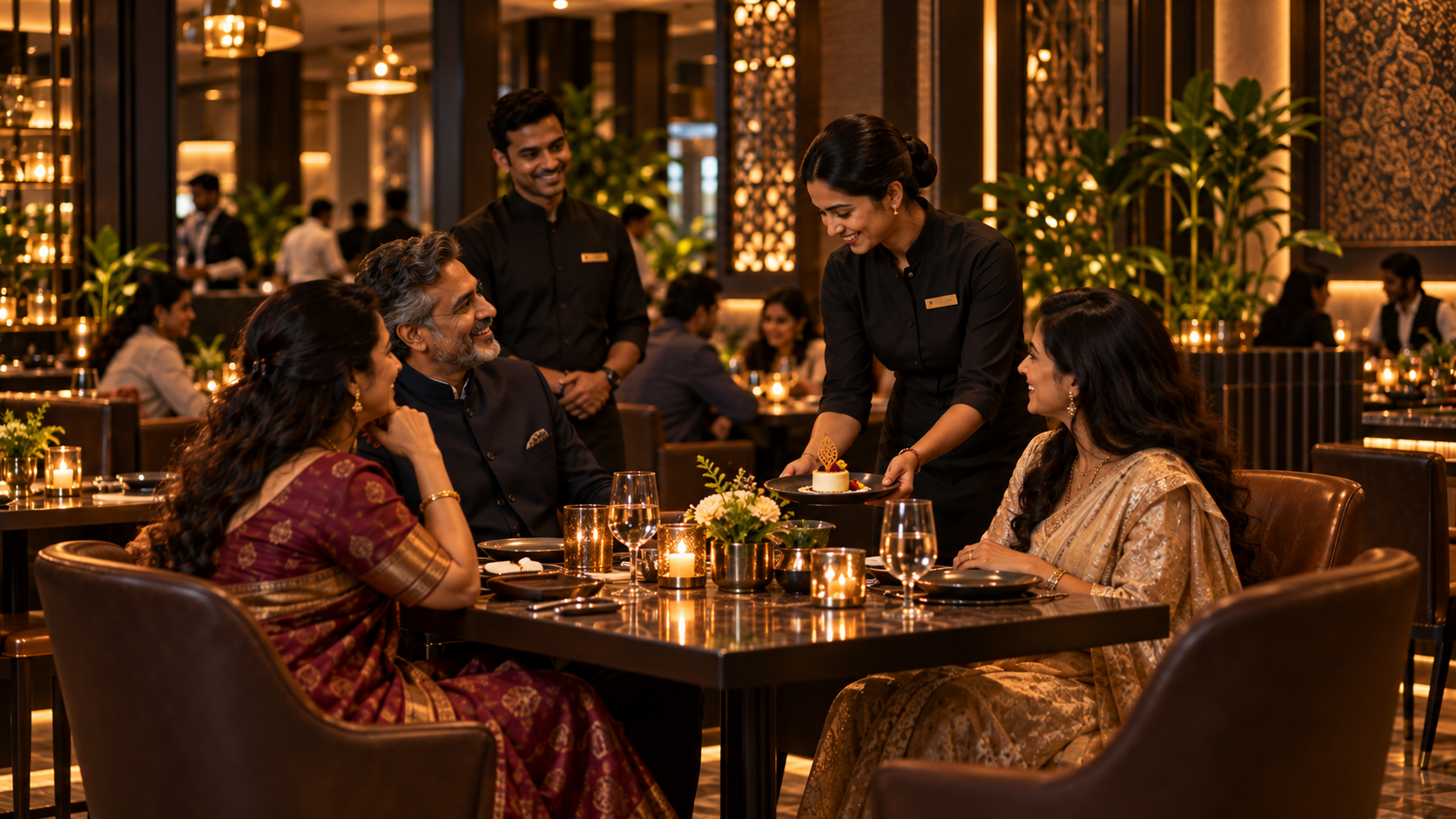
People remember being recognised.
You don't need an elaborate VIP program to make loyal customers feel valued.
Sometimes simple details matter more:
Remembering a regular customer's preferred table
Knowing their usual order
Recognising birthdays
Greeting them by name
Remembering dietary preferences
Occasionally offering something thoughtful
This is one area where technology should support hospitality, not replace it.
Customer data can tell you that someone has visited ten times.
Your staff creates the moment that makes the customer feel like those ten visits mattered.
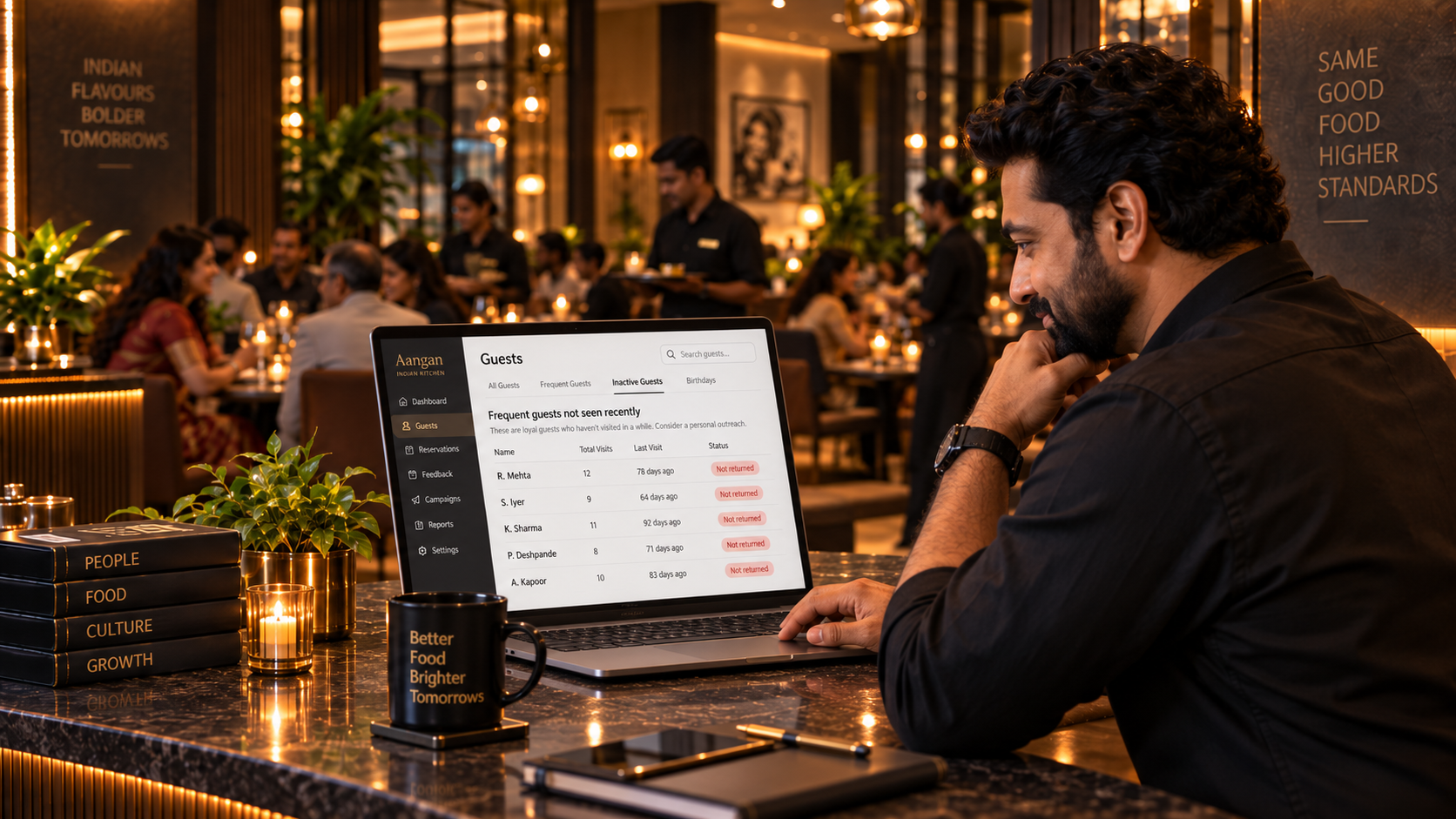
9. Pay Attention When Regular Customers Stop Coming
One of the strongest retention opportunities is often hidden inside your existing customer base.
Suppose someone visited your restaurant five times in two months and then disappeared.
That behavior is worth noticing.
There may be no problem at all. They may have moved, travelled or simply changed routine.
But sometimes it signals:
A poor recent experience
A favourite item being removed
Price sensitivity
A competitor gaining their attention
Delivery issues
Service inconsistency
Instead of randomly messaging your entire database, identify customers whose behaviour changed.
A message to a genuinely lapsed regular is much more relevant than a generic blast to thousands of numbers.
Make Customer Feedback Part of Your Retention Strategy
Customers don't always leave because another restaurant was better.
Sometimes they leave because something went wrong and nobody noticed.
A poor meal.
A late delivery.
Slow service.
A billing problem.
An incorrect order.
Many dissatisfied customers will never complain directly.
They simply won't return.
This makes feedback extremely important.
Pay attention to:
Google reviews
Delivery reviews
Direct customer feedback
WhatsApp conversations
Repeated complaints about specific dishes
Service complaints
Feedback about ambience or cleanliness
One complaint may be an isolated incident.
Twenty similar complaints are a pattern.
Fixing recurring problems may improve retention more than launching another campaign.
Build a Simple Repeat-Customer Routine
Retention works better when it becomes a regular process instead of an occasional campaign. Every week, ask four questions.
Which Customers Returned?
Understand which customer groups are coming back and how frequently.
Who Has Stopped Returning?
Identify previously active customers whose behaviour has changed.
Why Might Their Behaviour Have Changed?
Look at reviews, ordering history, menu changes and customer feedback.
What Should We Do Next?
Choose a specific action.
For example:
“Send an offer to everyone.”
is vague.
Instead:
“Invite customers who visited three or more times but haven't returned in 45 days to try our new weekend menu.”
That's targeted, measurable and connected to actual customer behaviour.
Frequently Asked Questions
How Do I Get More Repeat Customers for My Restaurant?
Start by delivering a consistently strong experience and then track which customers return. Make it easy to visit again, segment customers based on behavior and communicate with them when there is a relevant reason to return.
How Can Restaurants Improve Customer Retention?
Restaurants can improve retention through consistent service, customer recognition, relevant follow-ups, loyalty rewards, better customer segmentation and faster responses to negative feedback.
Should Restaurants Offer Discounts to Repeat Customers?
Discounts can help in specific situations, but they should not be the foundation of customer loyalty. Experiences, convenience, recognition and relevant communication can often create stronger long-term relationships.
When Should a Restaurant Contact an Inactive Customer?
There is no universal number of days. Look at how often that customer normally visits. A customer who usually comes every week may be considered inactive much sooner than someone who typically visits every two months.
What Customer Retention Metrics Should Restaurants Track?
Useful metrics include repeat customer rate, visit frequency, time between visits, customer spend, inactive customers and customer behaviour by channel or outlet. The most useful metrics depend on the type of restaurant and normal customer visit cycle.
See what Amello finds for your restaurant.
Get a free AI growth audit of your listing, reviews and local search presence.
Find my Restaurant