

Guide
Restaurant marketing ideas that work in 2026
A practical guide for Indian restaurant owners and managers. Learn how to get found in nearby searches, build a review engine, keep social media consistent, and bring guests back, without hiring an agency.
01. Get found nearby
Local SEO and your Google Business Profile
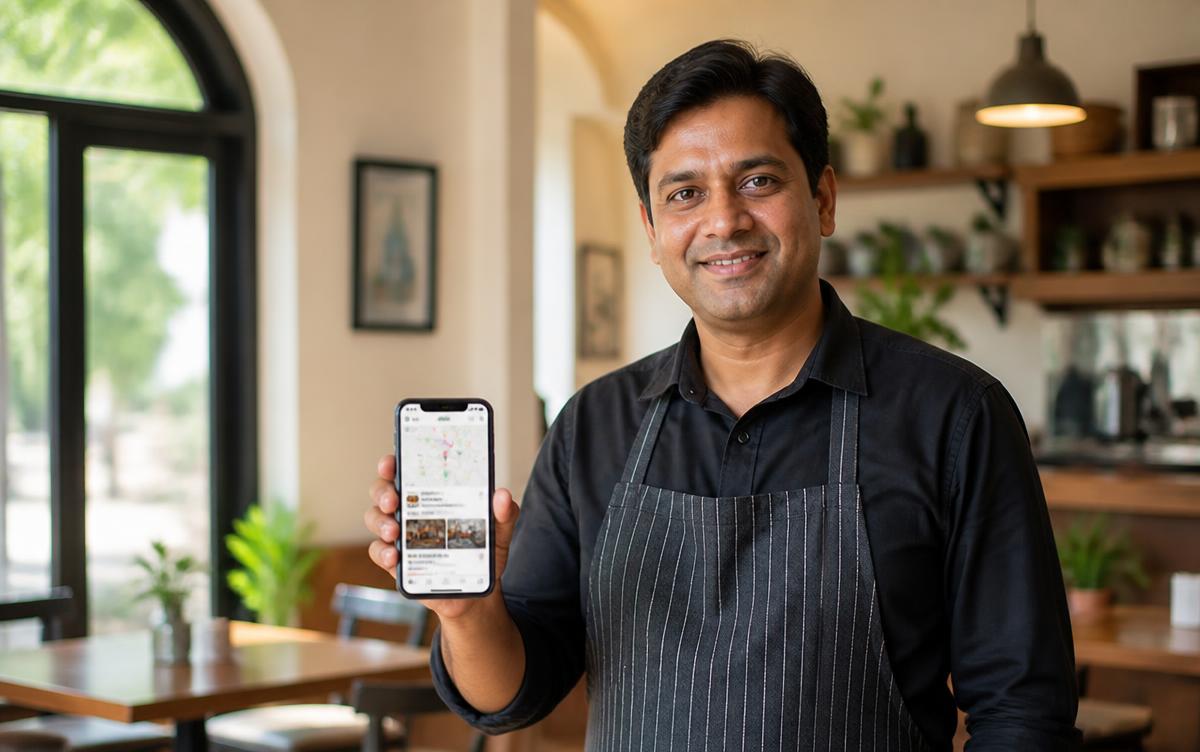
Most restaurant demand starts with a nearby search: restaurants near me, best biryani in Indiranagar, cafe open now. The profile that answers those searches best wins the visit.
- Complete every field on your Google Business Profile: categories, hours including holiday hours, phone, ordering and booking links, and your service area.
- Add fresh photos every month. Dishes, interiors, staff and the storefront shot in daylight outperform stock imagery.
- Keep your name, address and phone number identical across Google, Zomato, Swiggy, Instagram and your website. Mismatches split your local ranking signals.
- Use Google Posts for offers, festival menus and new launches. They appear directly inside your listing.
- Publish a page per outlet with the menu in text, not only as an image, so search engines and AI assistants can read what you actually serve.
02. Build trust
Reviews and reputation management
Rating and review volume decide whether a diner picks you or the place two doors down. Reviews are also one of the strongest local ranking signals Google uses.
- Ask at the right moment: on the bill, on a packaging insert, or in a WhatsApp message an hour after the order.
- Reply to every review, positive and negative, within 24 to 48 hours. A calm, specific reply to a complaint reassures the next hundred readers.
- Track recurring themes such as wait times, spice levels or packaging, then fix the operational cause instead of only the comment.
- Never buy reviews. Platforms filter them and the ranking damage outlasts the short term bump.
04. Bring them back
Guest retention and repeat orders
Winning a new diner costs far more than bringing back one who already liked you. Retention is the cheapest growth lever most restaurants ignore.
- Segment by behaviour: first timers, regulars, and lapsed guests who have not ordered in 30 to 60 days.
- Send timely, relevant WhatsApp messages. A favourite dish back on the menu beats a generic 10 percent off.
- Run a simple loyalty mechanic such as every fifth order or a birthday treat, rather than a points system nobody tracks.
- Capture contact details at every touchpoint: dine in QR menus, delivery packaging, billing and bookings.
- Measure repeat rate monthly. If it is not moving, your offers are not matching what guests actually order.
05. Fill the quiet hours
Offers, occasions and local partnerships
Discounting everything erodes margin. Targeted offers fill specific gaps instead.
- Build offers around weak dayparts such as weekday lunch, late evenings or Monday dinners, not around your busiest slots.
- Plan around the local calendar: festivals, exam seasons, cricket fixtures and long weekends.
- Partner with nearby offices, gyms, co-working spaces and hotels for standing corporate or bulk deals.
- Bundle instead of discounting. Add a drink or dessert rather than cutting the food price.
06. Make it a habit
A weekly restaurant marketing plan you can keep
Marketing fails in restaurants because it competes with service. Fix a small, repeatable rhythm instead of one big campaign a quarter.
| Day | Task |
|---|---|
| Monday | Review last week's sales and pick the two dishes to promote. |
| Tuesday | Shoot content once, enough for the whole week. |
| Wednesday | Reply to every review and comment from the last seven days. |
| Thursday | Publish a Google Post and refresh your listing photos. |
| Friday | Send one WhatsApp campaign to lapsed guests. |
| Weekend | Capture guest moments and user content inside the outlet. |
07. Common questions
Restaurant marketing FAQs
What is the most effective restaurant marketing idea?
Getting found in nearby searches. A complete, active Google Business Profile with fresh photos, current hours and recent reviews sends more walk-ins and orders than any single campaign, because it reaches people who already want to eat now.
How much should a restaurant spend on marketing?
Most independent restaurants in India spend roughly 3 to 6 percent of revenue on marketing. Spend the first slice on listings, reviews and retention, which compound, before paid ads, which stop the moment you stop paying.
How do restaurants get more reviews?
Ask at the moment of satisfaction: on the bill, on a packaging insert with a QR code, or in a WhatsApp message an hour after delivery. Reply to every review within 48 hours so the next reader sees an owner who cares.
How often should a restaurant post on social media?
Three to five times a week is enough if it is consistent. Shoot once a week and repurpose the same content into a Reel, a carousel, a story and a Google Post rather than chasing daily uploads.
03. Stay visible
Social media marketing that actually sells
Consistency beats production value. A steady, recognisable feed keeps you in mind between visits and gives new diners a reason to trust you.